





Why POE Air Fiber Outperforms Coir Mattress in Humid Tropical Markets
Coconut coir (coir fiber) mattresses have long been marketed as a natural, firm, eco-friendly bedding option. They are widely used in Southeast Asia, South Asia and other tropical markets, favored by consumers looking for plant-based support. However, high heat, constant humidity, monsoon rains and poor ventilation create major pain points for coir mattresses: moisture trapping, mildew, rot, pest infestation and heavy weight.
POE 4D air fiber’s open 3D interwoven polymer structure brings a new solution for hot and humid tropical markets. This article contrasts POE air fiber and coir mattresses, analyzing material performance, maintenance, wholesale supply, warranty risk and retail competitiveness for bedding brands operating in tropical countries.
1. Core Material Characteristics
POE 4D Air Fiber
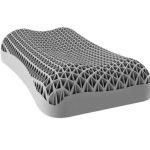
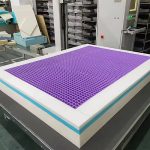
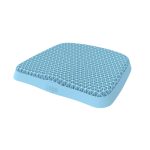
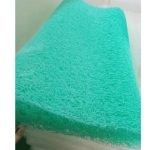
Virgin POE monofilaments thermally welded at intersections, void ratio >90%. No natural organic components. Water flows straight through the open network. Fully washable, quick air-drying. Polymer material does not feed mold, bacteria or insects. Delivers consistent springy support, firmness adjustable by fiber density and filament diameter.
Coconut Coir Mattress
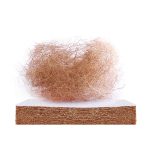
Made from compressed coconut husk fibers, usually bonded with natural latex or PU adhesive. Organic plant fiber structure. Coir itself absorbs and retains moisture. Even with treatment, the organic nature of coconut fiber provides nutrients for mold, mildew and bugs. Coir is rigid and firm; support will degrade once fiber rots or binder breaks down.
2. Performance Benchmark for Humid Tropical Climate
| Comparison Item | POE 4D Air Fiber | Coconut Coir Mattress | Notes |
|---|---|---|---|
| Moisture absorption | Near zero; water permeates through | High capillary absorption; retains moisture inside | The biggest difference in tropical climates |
| Mold & mildew risk | Extremely low (inorganic polymer) | High risk under prolonged humidity | Coir may develop mold even with anti-fungus coating once coating is scratched |
| Pest / mite risk | Low; no organic nutrition source | Moderate to high; organic fiber attracts mites & insects | Common complaint in tropical residential & hotel projects |
| Performance after water spill | Rinse and air dry, property unchanged | Traps moisture; mold and odor develop within days | Coir core cannot be fully washed |
| Weight | Lightweight | Heavy | Coir increases shipping and last-mile delivery cost |
| Structural aging mechanism | Welding point fatigue after repeated compression | Fiber decay + binder degradation under humidity | Humidity drastically shortens coir service life |
| Odor build-up | Hard to trap odor | Organic odor easily develops when damp |
3. Wholesale & Supply Chain Comparison
| Item | POE 4D Air Fiber | Coconut Coir Mattress |
|---|---|---|
| Raw material source | Synthetic polymer, stable mass production | Agricultural by-product; supply affected by coconut harvest |
| Bulk wholesale price | Mid-range | Low entry price |
| Vacuum compressible | Yes, for container shipment | No, bulky |
| MOQ | Flexible for brand trial orders | Low MOQ for basic coir boards |
| Storage requirement | Normal warehouse | Must keep dry; mold may form during storage in humid ports |
Key commercial note: Coir has attractive low upfront cost, but hidden failure and return rates spike in tropical humid markets. Many retailers face warranty claims and bad reviews triggered by mold and odor.
4. Pros & Cons for Bedding Brands
POE 4D Air Fiber
✅ Pros
- Strong selling proposition for tropical consumers: anti-mold, fully washable, fast-drying, ideal for rainy seasons.
- No organic rot risk, much lower after-sales complaint rate in coastal / monsoon regions.
- Light weight and compressible packing reduce ocean freight and local delivery costs.
- Firmness customizable; can be engineered for both retail home bedding and hotel FF&E projects.
- No natural allergens like coconut dust or rubber binders.
❌ Cons
- Higher initial wholesale cost than basic coir.
- Consumer education required: buyers need to understand synthetic polymer material vs natural plant fiber.
- Low-grade recycled POE has poor compression fatigue; brands must specify virgin POE to avoid durability issues.
Coconut Coir Mattress
✅ Pros
- “Natural coconut fiber” marketing story resonates well with eco-focused consumers.
- Low raw material cost, good entry-level price point for price-sensitive markets.
- Firm support preferred by some customers with back pain needs.
❌ Cons
- Core pain point in humid tropics: moisture retention, mold, mildew and persistent musty odor. Anti-fungal treatment only offers temporary protection.
- Organic fiber will degrade over time, accelerated by high humidity.
- Heavy and non-compressible, pushing up logistics cost.
- Cannot wash core; spills often lead to irreversible contamination.
- Coconut dust and binder additives may trigger allergic reactions.
5. Service Life & Warranty Risk in Tropical Conditions
- POE 4D Air Fiber (Virgin Grade): 7–10 years residential service life; 4–6 years for hotel high-traffic use. Degradation mainly from cyclic compression fatigue, not humidity.
- Coconut Coir Mattress: 4–7 years in dry zones. In persistent hot-humid tropical areas, usable life often drops to 2–4 years. Mold and binder failure are the main failure modes, leading to frequent warranty disputes.
Retailer risk reminder: Stating coir is “mold-proof” in humid markets can lead to large volumes of returns and negative reviews.
6. Recommended Market Positioning Strategy
✅ Choose POE 4D Air Fiber if your brand targets:
- Tropical coastal cities, islands and regions with long monsoon seasons.
- Hotels, serviced apartments and vacation resorts where mold complaints hurt reputation.
- Families with kids or pets, frequent spills and high hygiene requirements.
- E-commerce brands with a focus on low after-sales rate and stable product reviews.
✅ Keep Coir Mattress SKUs if:
- Selling to dry inland tropical areas with low rainfall.
- Targeting budget buyers who prioritize low price and natural plant material concept.
- Clearly labeling humidity limitations and mold risk in product descriptions.
7. FAQ for Bedding Wholesalers & Retail Brands
Q1: Can anti-fungus coating fully solve coir’s mold problem in tropical markets? A: No. Coatings wear off over time. Once moisture enters the organic coir fiber, mold growth will still occur. It only delays the issue instead of eliminating it.
Q2: Does POE air fiber feel too plastic for tropical consumers? A: Premium POE air fiber with optimized monofilament design has a soft springy feel. Proper cover selection and product description can offset consumer prejudice against synthetic materials. Sample testing in local market is recommended.
Q3: Which product brings better long-term profit in Southeast Asian resort projects? A: POE air fiber. Although the procurement cost is higher, the reduction in mold-related returns, replacements and guest complaints delivers better total cost of ownership for resort operators.
Conclusion
Coconut coir mattresses hold a place in dry, budget-focused markets thanks to their natural positioning and low entry price. But in humid tropical environments, their organic fiber structure is an inherent weakness: moisture retention, mold, odor and rot become unavoidable long-term risks.
POE 4D air fiber’s open inorganic structure and full washability directly solve the biggest tropical bedding pain points. It outperforms coir on moisture resistance, hygiene stability and long-term reliability. For brands expanding into humid tropical countries, POE air fiber is a premium differentiated SKU that cuts after-sales losses and captures hygiene-focused buyers.
