



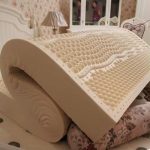

TPE Grid Pillow vs Memory Foam Pillow: Full Comparison For Wholesale Sourcing
Introduction
Memory foam pillows have long dominated the global functional bedding market for decades. However, rising consumer demand for cooling, washable and long-lasting sleep products pushes many wholesalers, Amazon sellers and private label brands to evaluate alternative SKUs — with TPE gel grid pillows becoming the most popular competitor.
For bulk importers, simply adding both items to catalogs is not enough. You need clear insights on material performance, end-consumer pain points, procurement costs, after-sales risks and market positioning. This comprehensive comparison helps you allocate inventory resources and develop differentiated product strategies for North American and European markets.

1. Core Product Overview
TPE Gel Grid Pillow
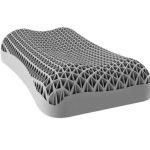
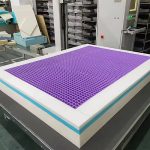
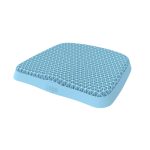
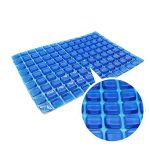
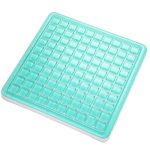
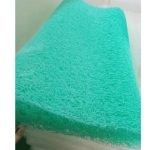
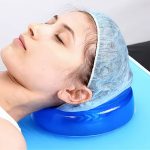
Made of injection-molded SEBS thermoplastic elastomer, constructed with interconnected honeycomb lattice. No foam filling. The open-grid design delivers instant adaptive rebound, passive airflow cooling and full washable capability for the inner core.
Memory Foam Pillow
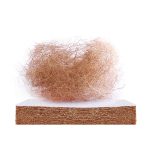
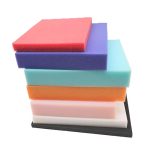
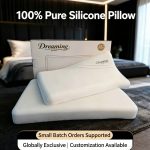
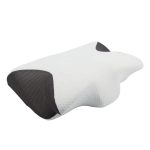
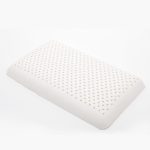
Manufactured from polyurethane slow-rebound foam. Relies on contour molding to fit head and neck. Available in solid foam, shredded foam and gel-infused variants, widely recognized as entry-level ergonomic bedding.
2. Head-to-Head Comparison Table for Wholesale Buyers
| Comparison Item | TPE Gel Grid Pillow (Premium SEBS Grade) | Memory Foam Pillow (Standard Gel-Infused) |
|---|---|---|
| Heat Dissipation Performance | ★★★★★ Open honeycomb tunnels enable continuous airflow; permanent structural cooling | ★★☆☆☆ Gel coating only offers temporary cooling; closed foam structure traps body heat overnight |
| Inner Core Washable | ✅ Fully soakable & machine washable | ❌ Strictly cannot soak; only pillowcase can be cleaned |
| Rebound Characteristic | Fast adaptive rebound; each grid cell compresses independently | Slow contour rebound; one-piece foam produces uniform support |
| Suitable Sleeping Positions | Side sleepers, back sleepers; multiple loft options available | Mainly back sleepers; less ideal for broad-shouldered side sleepers |
| Anti-Dust Mite & Hygiene | Excellent, non-porous material, washable to remove sweat & allergens | Fair; foam pores easily accumulate dust and mites without deep cleaning |
| Long-Term Durability | Stable elasticity for 3–5 years; resistant to permanent flattening | Gradual sagging after 1–3 years; cheap variants collapse rapidly |
| Typical Wholesale Cost Tier | Mid-range | Low to mid-range |
| Average Retail Positioning | Mid-premium functional cooling bedding | Entry to mid-tier ergonomic bedding |
| Odor Risk | Minimal temporary scent with pure SEBS; easy to ventilate | High risk of chemical off-gassing from polyurethane raw materials |
| Recyclability | ✅ Pure SEBS material can be recycled | Difficult to recycle due to complex chemical composition |
| OEM Customization Space | High: adjust grid density, cell size, loft, contour shape | Limited adjustments to foam density and pillow outline |
| Online Return Risk | Low (fewer complaints about heat retention & deformation) | Medium-High (top complaints: hot, off-gassing, flattened foam) |
3. Advantages & Weakness Breakdown
3.1 TPE Gel Grid Pillow
Strengths
- Unique selling point: all-night structural cooling, attractive to hot sleepers
- Fully washable core creates huge differentiation in marketplace listings
- Lower long-term after-sales loss for retailers
- Strong visual uniqueness, better click rate for social commerce and e-commerce
- Meets growing sustainable bedding requirements for EU and US buyers
Weaknesses
- Higher unit purchasing cost than basic memory foam
- Some consumers take time to adapt to grid tactile feeling
- Generic low-grade blended TPE on market creates quality chaos for sourcing
3.2 Memory Foam Pillow
Strengths
- Mature market, consumers have high awareness
- Abundant suppliers, flexible minimum order quantities for basic models
- Lower entry cost for new bedding sellers
- Rich existing listing templates and consumer education resources
Weaknesses
- Severe market homogenization, triggering brutal price competition
- Inability to solve overheating complaints fundamentally
- Persistent chemical odor is a top cause of online returns
- Cannot be thoroughly cleaned, limiting appeal for hygiene-focused buyers
4. Sourcing & Catalog Strategy Suggestions For Bulk Buyers
Strategy 1: Tiered product portfolio (Most recommended)
- Entry tier: Standard memory foam pillows, capture price-sensitive traffic
- Upgraded flagship tier: SEBS TPE gel grid pillows, target hot sleepers and premium customers to boost overall profit margin
Strategy 2: Channel matching
- DTC independent sites, Amazon premium listings, boutique retail: prioritize TPE grid pillows as star SKU
- Discount supermarkets, budget wholesale channels: focus on cost-effective memory foam
Strategy 3: Sourcing risk control
When purchasing TPE grid pillows, explicitly require pure SEBS material test reports to avoid low-quality blended TPE.
For memory foam, ask suppliers to improve ventilation formulas and conduct deodorization processing to reduce negative reviews.
Conclusion
Memory foam pillows remain a stable basic bedding SKU. However, the category is saturated and faces unavoidable pain points including heat trapping and poor washability.
TPE gel grid pillows fill the market gap for high-performance functional bedding, targeting fast-growing groups of hot sleepers and hygiene-conscious consumers. For wholesale buyers looking to escape low-price competition and improve gross profit, adding TPE grid pillows to your lineup is a strategic long-term choice.
Contact our team to get sample comparisons, detailed specification sheets and customized OEM solutions for both pillow types.
FAQ
FAQ 1: Can I directly replace memory foam pillows with TPE grid pillows in my catalog?
Not completely. Memory foam still attracts price-entry shoppers. A mixed product line helps you cover different consumer budgets. Use memory foam for traffic acquisition and TPE grid pillows for upselling.
FAQ 2: Which pillow brings higher profit margins for online retailers?
Well-positioned TPE gel grid pillows support mid-premium pricing with less competition, usually delivering better gross profit. Memory foam suffers widespread price competition, compressing profit space.
FAQ 3: Are TPE grid pillows suitable for customers who love the “sinking feeling” of memory foam?
No. Memory foam offers slow sinking contour support, while TPE delivers springy adaptive support. You should clearly describe the different tactile experience on listings to avoid mismatched expectations and returns.
FAQ 4: Which product has stricter import certification requirements for EU market?
Memory foam needs strict chemical testing for VOC emissions. TPE made from pure SEBS can easily satisfy REACH and OEKO-TEX standards if raw materials are qualified.
FAQ 5: How to arrange inventory when sourcing both products?
Allocate more inventory to memory foam for steady basic sales. Start with small batch orders of TPE grid pillows, collect consumer review data, then expand order volume based on market feedback.
