




Spring Mattress Hybrid VS All-POE Air Fiber Core: Which Has Lower Long-Term Operation Cost?
Spring hybrid mattresses (pocket spring core combined with foam/latex comfort layers) have long dominated commercial hospitality and institutional bedding. Their familiar feel and moderate entry price make them the default selection for most FF&E tenders. However, hybrid designs carry hidden ongoing costs: foam layer degradation, noise, rust risk, and limited cleaning capability.
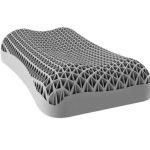
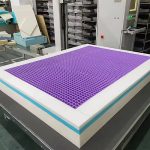
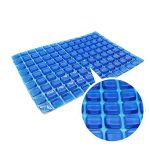
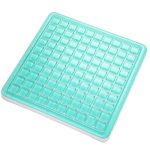
The all-POE air fiber core mattress uses a single monolithic 3D welded POE network, no springs, no adhesive foam layers. It delivers full core washability and consistent elastic support. This article compares these two core solutions, focusing on total operating cost over the service life, to help procurement teams and bedding brands evaluate commercial project ROI.
1. Core Material Structure
Spring Hybrid Mattress
Structure: Pocket spring coil base + top comfort layer (PU foam / latex / fiber padding) + fabric cover.
- Support comes from metal springs; comfort layers are bonded foam or elastic materials.
- Only outer cover can be cleaned. The foam comfort layer cannot be rinsed. Once liquid penetrates the cover, contaminants are trapped inside comfort layers.
- Failure points are split: spring noise, coil fatigue, foam sagging, adhesive degradation, and rust in humid environments.
All-POE Air Fiber Core Mattress
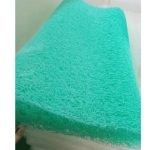
Structure: Single-piece virgin POE 4D interwoven monofilament core + removable zipper cover. No metal springs, no foam layers, no internal glue.
- Entire core is permeable and fully washable. Spills and contaminants can be flushed out, then air-dried quickly.
- The only long-term failure mode is fatigue at fiber welding joints after repeated compression cycles. No metal corrosion, no foam aging or adhesive breakdown.
2. Side-by-Side Cost & Performance Comparison
Reference: Queen size commercial grade mattress, bulk FOB China order, for hotel / hostel institutional use
| Comparison Item | Spring Hybrid Mattress | All-POE Air Fiber Core (Virgin Grade Commercial Spec) | Notes |
|---|---|---|---|
| Upfront Procurement CAPEX | Medium baseline | Higher (+20~30% vs hybrid spring) | Hybrid wins for one-time fit-out budget |
| Weight | Heavy | Lightweight | POE reduces freight & manual handling labor |
| Core Washable | ❌ No, only cover washable | ✅ Full core rinseable | Biggest hygiene & cost difference |
| Primary Failure Modes | Foam sagging, spring squeaking, coil fatigue, rust in humid areas | Fiber weld point fatigue | Hybrid has multiple independent failure points |
| Service Life (High-turnover hostel) | 3–5 years | 4–6 years | |
| Service Life (Mid-traffic hotel) | 4–6 years | 5–7 years | |
| Noise Risk | Spring squeaking when coils wear | Minimal noise for premium POE grade | Hybrid noise complaints rise with age |
| Mold & Mildew Risk | Moderate-high if liquid penetrates comfort layers | Very low, no organic/foam substrate | Critical in tropical humid locations |
| Component Replaceability | Usually whole mattress replacement once foam/springs fail | Replace cover only; core reusable | Major TCO advantage for POE |
| Recycling / Disposal Cost | Hard: metal + foam composite, separation costly | Easier: single polymer material | Lower landfill & disposal fees |
3. Breakdown of Long-Term Operating Costs
Spring Hybrid Mattress
- Direct replacement cost: Even if springs remain intact, the top foam comfort layer will sag, soften or develop odor. Stains penetrating the cover ruin the comfort layer; the whole mattress must be replaced.
- Maintenance labor: Routine mattress rotation to slow spring sag; frequent inspection for squeaking coils and cover damage.
- Guest complaint cost: Squeaking noise, trapped odor, mold in humid climates trigger negative reviews and room downgrade risks.
- Humidity penalty: In coastal/tropical sites, metal springs may rust, accelerating end-of-life.
Core weakness: Hybrid mattresses have multiple vulnerable components. Failure of any single component forces full mattress replacement.
All-POE Air Fiber Core Mattress
- Higher initial purchase price, but the core survives cover damage. If the outer zipper cover tears or stains, simply swap the cover instead of scrapping the mattress core.
- Sanitation cost reduction: Spills and incontinence contamination can be flushed out, eliminating early write-offs caused by penetration.
- Minimal ongoing inspection work: No spring squeak or rust checks.
- Limited aging path: Only fiber weld fatigue over millions of compression cycles; no foam degradation.
Key commercial takeaway: POE’s higher CAPEX is offset by fewer premature mattress replacements, especially in high-spill, humid, high-turnover operations.
4. Pros & Cons for Commercial Operators
Spring Hybrid Mattress
✅ Pros
- Well-known comfort profile; guests recognize spring mattress feel.
- Lower initial purchase cost, widely accepted in tender budgets.
- Large supplier pool, fast lead times, mature testing certifications.
❌ Cons
- Multiple failure modes: foam degradation, coil squeaking, rust risk.
- Cannot deep clean core; liquid penetration leads to permanent contamination.
- Heavy, higher labor cost for moving and rotating mattresses.
- Higher waste generation; composite materials are difficult to recycle.
All-POE Air Fiber Core Mattress
✅ Pros
- Full-core washable, eliminating early discards from spills and stains.
- No metal parts, zero rust risk; excellent performance in humid tropical regions.
- Lightweight, easier for housekeeping to lift, rotate and inspect.
- Single polymer construction, simpler end-of-life recycling.
- Consistent support without foam layer sagging.
❌ Cons
- Higher upfront procurement cost.
- Spring-like bounce feel; different tactile experience from traditional spring hybrid.
- Low-grade recycled POE suffers fast fatigue; buyers must enforce virgin POE specification with compression cycle test reports.
- Market education required for buyers used to spring mattress products.
5. Recommended Project Selection Guide
✅ Select All-POE Air Fiber Core when:
- High-turnover hostels, serviced apartments, resorts in humid / coastal / monsoon climate.
- Facilities with frequent liquid spills, incontinence risk or strict hygiene audit requirements.
- Operators aiming to reduce repeated mattress replacement expenditure and landfill waste.
- Properties prioritizing low guest complaints about mattress odor and mold.
✅ Select Spring Hybrid Mattress when:
- Fixed tight CAPEX budget for new fit-out, long-term operating cost is not the primary evaluation metric.
- Mid-low traffic hotels in dry climate zones, low risk of spills and moisture penetration.
- Brand positioning requires the classic spring mattress feel that guests already prefer.
6. FAQ for FF&E Buyers & Bedding Brands
Q1: Does all-POE air fiber offer the same pressure relief as spring hybrid? A: Premium commercial-grade POE air fiber provides uniform pressure distribution without localized pressure spikes. It does not replicate the layered soft-top feel of spring hybrid. Samples are strongly recommended before mass procurement.
Q2: Can POE air fiber fully eliminate mattress noise? A: High-quality virgin POE with optimized monofilament structure produces barely perceptible noise under bedding. Low-cost POE may have crinkling sound, so acoustic testing is advised for hospitality projects.
Q3: For tender documents, what test reports should I request? A: For POE: virgin material certification, cyclic compression fatigue test (≥100,000 cycles), wash durability report. For spring hybrid: spring fatigue test, foam compression set test, anti-rust treatment certification.
Conclusion
Spring hybrid mattresses remain the go-to choice for projects constrained by upfront capital budget, with familiar comfort and established supply chains. But their composite structure creates multiple failure points. Once foam or comfort layers get contaminated or degraded, the whole mattress is discarded, raising long-run operating expenses.
All-POE air fiber core mattresses carry higher initial purchase cost. Their unique advantage is core reusability and full washability, removing the biggest trigger for premature mattress replacement in high-use commercial environments. For humid, high-turnover hostels and hospitality projects, POE usually delivers lower total long-term operation cost.
