How Is Polyurethane Foam Manufactured? Step-by-Step Production Process
Introduction
Polyurethane foam (PU foam) begins as two liquid chemical components and transforms into lightweight, cellular foam through tightly controlled chemical reactions. Whether you source foam for mattresses, sofa cushions, building insulation, packaging or automotive padding, understanding the manufacturing process helps buyers evaluate foam consistency, quality and cost.
Most flexible polyurethane foam used for bedding and furniture is made via continuous slabstock foaming, while rigid foam and shaped foam parts rely on molded or continuous lamination methods. This guide breaks down the standard industrial production workflow used by professional PU foam manufacturers worldwide.
eps foam factory
Core Raw Materials Used to Make Polyurethane Foam
Before production starts, factories prepare a balanced chemical formula. Every ingredient directly impacts foam density, softness, cell structure, durability and safety.
Polyol: The base component that builds the foam polymer structure
Isocyanate: Reacts with polyols to form polyurethane chains (TDI & MDI are the most common grades)
Blowing Agents: Generate gas to create millions of tiny air cells inside foam; water is the most widely used eco-friendly option
Catalysts: Balance reaction speed for foaming and solidification
Silicone Surfactants: Stabilize air bubbles to prevent collapse and ensure uniform cells
All liquid ingredients are stored in sealed temperature-controlled tanks. Automated metering pumps deliver exact volumes according to the target foam formula. Even small ratio errors cause inconsistent density, soft spots or brittle foam.
The polyol blend, additives and isocyanate flow into a high-speed mixing head. Liquids combine rapidly within seconds to create a uniform reactive mixture.
Key note: The chemical reaction starts immediately after mixing, so the liquid must be dispensed without delay.
For large-scale flexible foam blocks (slabstock foam for mattresses and cushions):
The mixed liquid flows onto a moving conveyor belt lined with protective paper. As the conveyor moves forward, the liquid begins rising rapidly.
Gas released from the blowing agent creates interconnected air pockets, and the liquid expands upward to form a tall, continuous foam slab often called a foam bun.
For rigid foam insulation or custom-shaped foam:
Mixture is injected into closed molds or continuously laminated between facing sheets for insulation boards.
Step 3: Gelation & Primary Curing
While expanding, two reactions happen simultaneously:
Foaming: Gas continues forming air cells
Gelation: Polyurethane polymer chains crosslink and harden
Temperature inside the rising foam rises naturally from exothermic chemical reactions. Factory operators control line speed and room temperature to avoid common defects:
Collapsed foam
Large voids or holes
Uneven cell size
Surface cracking
Once fully expanded, the foam slab becomes stable and solid on the production line.
Step 4: Post-Curing (Maturation)
Freshly formed foam is not ready for cutting right away.
Large foam blocks are moved to a curing warehouse and rest for 12–48 hours. During maturation, incomplete chemical reactions finish, internal temperatures stabilize, and internal stress inside the foam dissipates.
Skipping proper post-curing leads to long-term shrinkage, sagging and unstable foam dimensions after cutting.
Step 5: Cutting, Slicing & Custom Fabrication
After full curing, foam blocks go to the cutting workshop. Manufacturers use automated machinery to process foam into finished stock:
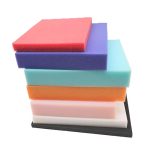
Horizontal slicing into continuous sheets for mattress layers
Vertical cutting into standard-size blocks
CNC contour cutting for shaped cushions, pillow inserts and packaging foam
Trimming off uneven outer edges (foam skin removal)
Customers can order standard sheets or fully custom-cut polyurethane foam according to thickness, width and length specifications.
Step 6: Quality Inspection & Finishing
Every batch undergoes routine quality testing before shipment:
Density measurement
Compression hardness / firmness test
Resilience (bounce performance)
Cell structure visual inspection
Safety checks for certified grades (CertiPUR-US, low VOC standards)
Qualified foam is stacked, wrapped and prepared for wholesale delivery to furniture factories, bedding brands, packaging companies and industrial buyers.
Two Main Industrial PU Foam Production Methods (Comparison Table)
Aspect
Continuous Slabstock Foaming
Molded PU Foam Production
Final Output
Large long foam blocks (foam buns)
Single finished shaped parts
Typical Products
Mattress foam sheets, sofa cushion stock, pet bed foam
Car seats, contoured pillows, shaped packaging inserts
Production Volume
High mass production
Medium / low batch production
Cost Per KG
Lower for bulk orders
Higher due to mold setup
Cell Uniformity
Very consistent across sheets
Stable within individual molded pieces
Best For
Wholesale foam suppliers, bedding manufacturers
Custom 3D-shaped foam components
Step 7: Packaging & Bulk Shipment
Cut foam sheets or custom foam pieces are wrapped in protective plastic film to prevent dust and moisture absorption during ocean or land transportation. Large bulk orders are palletized for container shipping to global importers.
Key Factors That Determine Final Foam Properties
Manufacturers adjust the production formula and process parameters to create different foam grades:
Density (kg/m³): Controls durability and weight
Open-cell vs closed-cell structure: Decides breathability and waterproof performance
Raw material ratios: Sets softness, firmness and rebound
Curing time and temperature: Prevents shrinkage and deformation
Additive selection: Determines fire resistance, VOC levels and anti-mold performance
Frequently Asked Questions
Q1: What is the difference between slabstock foam and molded polyurethane foam?
Slabstock produces giant continuous foam blocks that get sliced into sheets for mattresses and cushions. Molded foam is poured into individual molds to create one-piece shaped products like car seat padding.
Q2: How long does foam need to cure after production?
Standard flexible PU foam requires minimum 12 hours of curing; high-density and low-VOC foam often need 24–48 hours to stabilize fully.
Q3: Can manufacturers adjust foam firmness during production?
Yes. By modifying chemical formulations and density settings, factories produce ultra-soft, medium-firm or extra-supportive polyurethane foam for different sleep and seating needs.
Q4: Why do some foam batches contain bubbles or voids?
Poor mixing speed, incorrect raw material ratios, unstable production temperature or insufficient surfactant additives are the main causes of foam defects. Reputable suppliers strictly monitor all process parameters.
Final Thoughts
Polyurethane foam manufacturing relies on precise chemistry, automated equipment and consistent quality control. The complete process turns simple liquid raw materials into versatile foam materials used across bedding, furniture, construction and industrial sectors.
If you are sourcing bulk polyurethane foam sheets, mattress foam or custom-cut foam products, understanding production standards allows you to communicate clear specifications with manufacturers and avoid low-quality foam with inconsistent density or early sagging.