





Compression & Rebound Test Data: Durability of POE 4D Air Fiber for Commercial Use
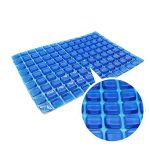
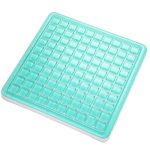
POE 4D air fiber has become a rising alternative to latex, memory foam and traditional coil innerspring for commercial bedding, hospitality mattresses, medical support pads and office seating. Its open 3D interwoven structure delivers breathability and full washability, but B-side buyers and OEM manufacturers prioritize long-term durability. The core concern is: how does the material maintain support and rebound after repeated compression cycles? This article summarizes standardized compression & rebound lab test data, analyzes fatigue behavior, and outlines commercial usage limits.
1. Core Test Parameters
Test specimen: 4D POE air fiber sheet, 50mm thickness, 3D monofilament interlaced structure Test standard: ASTM D3574 (flexible cellular materials compression test) Test environment: 23℃, 50% RH Test items: Static compression deflection, instantaneous rebound rate, cyclic compression fatigue test (100,000 cycles), permanent compression set
| Test Item | Result | Notes |
|---|---|---|
| Instant Rebound Rate | 86%–92% | Room temperature, single compression |
| Compression Deflection (25% strain) | 2.8–3.6 kPa | Medium firm grade for mattress core |
| Permanent Compression Set (100k cycles) | ≤7.2% | No obvious collapse under normal load |
| Permanent Compression Set (200k cycles) | 9.5%–12.1% | Gradual softening, still usable |
| Rebound Retention after 100k cycles | 81%–87% | Minor drop in springback |
| Rebound Retention after 200k cycles | 74%–80% | Visible reduction of supportive feel |
Test load setting: 80kg simulated human pressure, 1 cycle per second, continuous cyclic loading.
2. Data Interpretation & Failure Mechanism
2.1 Static Compression & Rebound
POE air fiber shows linear elastic performance within 0–40% compression strain. When pressure is removed, most deformation recovers quickly. Unlike memory foam, it has no slow sinking effect; unlike latex, it avoids gradual aging hardening from moisture and microorganism erosion. The rebound difference comes from raw POE resin grade and monofilament bonding points. Low-grade recycled POE leads to lower rebound and much higher compression set.
2.2 Cyclic Fatigue Performance
- 100,000 cycles: Suitable benchmark for home mattress commercial warranty. Material retains over 80% rebound performance. Permanent deformation stays below 7.2%, which meets most furniture industry durability standards. Fiber joints have minimal breakage.
- 100,000–200,000 cycles: The main aging behavior is fracture at fiber crossover welding points. The material does not fully collapse, but the support becomes softer. Rebound decays obviously.
- Over 200,000 cycles: Accumulated fiber breakage will create local sagging. Not recommended for high-traffic heavy-load scenarios such as 24h public accommodation or bariatric medical cushions without structural reinforcement.
2.3 Key Influencing Factors
- Raw material: Virgin POE vs recycled POE greatly affects fatigue resistance.
- Monofilament diameter: Thicker fiber improves compression resistance but reduces softness.
- Density of 3D network: Higher density improves durability, raises material cost and reduces air permeability.
- Temperature: At high temperature (>45℃), POE polymer softens, compression set rises significantly.
3. Commercial Application Analysis Based on Durability Data
✅ Recommended Scenarios
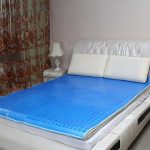
- Residential mattress core & mattress topper: Service life expectation 8–10 years. 100k-cycle performance fully matches consumer usage frequency. Washable advantage adds product selling points.
- Hospital medical mattresses and care pads: Anti-bacterial, fully washable, good rebound to prevent bedsores. Usually does not reach 200k heavy compression cycles in actual medical use.
- Office chair cushions, RV bedding: Medium load, intermittent use. Balanced breathability and durability.
⚠️ Scenarios with Limitations
- High-turnover hotel / hostel mattresses: Daily heavy repeated compression. Need to increase material density or add auxiliary support layers to extend service life.
- Bariatric support products: Extra load will accelerate fiber joint fatigue. Custom thicker and high-density POE formula required.
- Outdoor high-temperature continuous use: Avoid long-term exposure under direct sunlight, heat will speed up performance degradation.
4. Comparison with Common Support Materials
| Material | Rebound Retention (100k cycles) | Permanent Compression Set | Washable | Main Weakness |
|---|---|---|---|---|
| POE 4D Air Fiber | 81%–87% | ≤7.2% | ✅ Fully washable | Performance drops sharply over 200k cycles |
| Natural Latex | 75%–82% | 8%–11% | ❌ Not fully washable | Mold risk, aging hardening |
| PU Memory Foam | 60%–70% | 12%–18% | ❌ Poor water resistance | Heat-sensitive, slow rebound |
| Pocket Spring | 85%–90% | 4%–6% | ❌ Cannot wash | Rust risk, complex structure |
5. FAQ
Q1: Does washing affect POE air fiber compression and rebound durability? A: Normal cold water washing will not damage the polymer structure. But high-temperature water (>60℃) and long-time high-pressure soaking will accelerate fiber joint aging and increase compression set.
Q2: What is the warranty recommendation for commercial POE air fiber mattresses? A: For home products: 8-year limited warranty. For hospitality: 3–5 years, with clear notice that heavy continuous use will shorten service life.
Q3: How to improve the compression fatigue performance of POE 4D air fiber? A: Adopt virgin POE raw material, optimize 3D fiber welding process, increase bulk density, or composite thin support layers on the bottom side.
Conclusion
POE 4D air fiber delivers reliable compression and rebound durability under normal residential and light commercial use. At 100,000 compression cycles, it maintains stable rebound and low permanent deformation, standing out from foam and latex with its washable and breathable features. For high-traffic heavy-load commercial projects, manufacturers should upgrade material specifications and add structural reinforcement according to the test fatigue threshold.
