



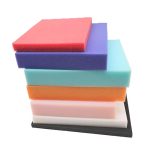
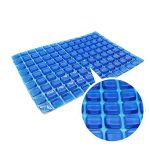
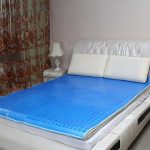
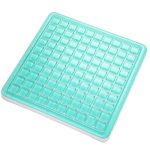



Can POE Air Fiber Mattress Be Roll Packed? Logistics & Container Loading Tips
Memory foam mattresses dominate boxed bedding thanks to excellent roll-compression performance, but many buyers new to POE 4D air fiber ask the core logistics question: can POE air fiber mattresses be roll packed for sea freight and DTC last-mile delivery? The short answer: partial compression is available for thin or specially modified POE layers, while thick full POE mattress cores cannot be tightly rolled like PU memory foam.

1. Compression Characteristics of POE Air Fiber
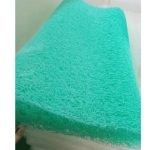
POE 4D air fiber is formed by thermally bonded continuous elastic filaments, creating an open 3D mesh structure.
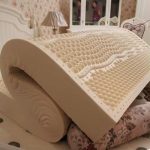
- Thin POE sheets (≤5cm): Can be compressed and roll packed under industrial vacuum compression. After unpacking, it rebounds fully within minutes with no permanent collapse. These are widely used as mattress toppers or comfort layers inside hybrid mattresses.
- Medium-thickness POE cores (5–10cm): Limited compression. Vacuum compression is possible, but roll diameter remains larger than memory foam. Brands often use flat packing or loose compression instead of tight roll packing.
- Thick full POE mattress cores (>10cm): Not suitable for tight roll packing. Heavy rolling creates persistent stress at filament bonding points. Long-duration compression during ocean shipping may lead to partial loss of rebound and indentation risk.
Key distinction: POE does not have the viscoelastic property of memory foam. It rebounds quickly, so extreme vacuum roll packing will exceed its material stress tolerance.
2. Logistics Trade-offs: Roll Pack vs Flat Pack
| Packing Method | Applicable POE Product | Freight Advantage | Risks & Notes |
|---|---|---|---|
| Vacuum Roll Pack | Thin POE toppers / hybrid mattress comfort layers | Reduces volume drastically; fits standard mattress box, compatible with DTC parcel delivery | Cannot sustain long compression for thick cores; factory compression testing mandatory |
| Flat Pack (No vacuum) | Full thick POE mattress cores | Preserves full material performance, zero rebound degradation | Larger CBM, higher ocean freight cost; requires rigid carton protection |
| Semi-compressed Flat Pack | Mid-thickness POE core | Balances volume saving and material safety; moderate CBM reduction | Compression time during transit must be controlled, avoid 60+ days continuous squeeze |
For overseas container shipments, hybrid design is the most popular compromise: use roll-packed memory foam base + thin POE air fiber topper, shipped in one box. This retains the POE selling feature while keeping container volume manageable.
3. Container Loading Tips for Bulk POE Air Fiber Mattress Shipments
3.1 Pre-shipment Factory Rules
- Set compression duration limits: If semi-vacuum is applied, specify maximum compression holding time in the contract. Avoid long sea transit over 45 days for compressed POE cores.
- Separate quality grades: Low-density POE fiber is more prone to permanent deformation under compression. Do not mix different POE batches in one container.
- Protective packaging: Use heavy-duty PE film + rigid corrugated cartons. POE mesh surface is easy to snag and tear on sharp edges during loading. Add corner guards.
3.2 Container Space Optimization
- Flat-packed full POE mattresses: Stack vertically, not stacked flat under heavy top load. Overstacking causes bottom mattress permanent compression damage.
- Roll-packed POE toppers: Place rolls horizontally, fill gaps with foam fillers to prevent rolling and shifting during ocean vibration.
- Calculate CBM in advance: POE bulk goods have higher actual volume than foam after decompression. Do not use memory foam CBM conversion ratio for POE quotation.
3.2 Shipping Environment Control
High temperature inside sealed containers worsens compression fatigue of POE filaments. For shipments to tropical ports:
- Avoid direct sun exposure before loading.
- Do not stack POE mattresses next to heat-generating cargo.
- Recommend 20GP /40GP dry container, no refrigerated container needed unless custom special requirements.
4. Commercial Implications for Bedding Brands & Distributors
- DTC brand strategy: Do not market thick full-POE mattresses as “roll-in-box” products. Misleading descriptions trigger high return rates and warranty complaints. Position roll-packed POE SKUs as mattress toppers.
- Quotation and budgeting: When sourcing full POE mattresses, budget higher freight cost compared with rolled memory foam. Calculate landed cost with actual CBM.
- Sample testing rule: Always run 30-day simulated compression aging test before mass order, verify rebound rate after decompression. Keep test reports for claim protection.
Limitations to Note
- Even compressible POE variants have compression limits. Repeated roll-compression cycles gradually reduce elasticity.
- POE material weight is higher than PU foam of same thickness, so total container payload needs careful weight check.
- Compression capability varies widely between manufacturers. Ask suppliers for independent compression rebound test data before order confirmation.
Final Takeaway
POE air fiber toppers and thin layers can safely be vacuum roll packed, but thick full POE mattress cores are best shipped flat or semi-compressed. Successful logistics planning relies on separating product SKUs, controlling compression time, and optimizing container stacking rules. Brands that ignore POE compression limits will face costly product deformation complaints upon customer receipt.
FAQ
Q1: Will roll-packed POE air fiber recover fully after opening?
A: Qualified thin POE sheets rebound completely if compression time is controlled. Thick POE core with long tight roll compression may leave permanent indentation and reduced support performance.
Q2: Can we use vacuum roll pack for 20GP container sea shipment?
A: Only for POE toppers and thin layers. For thick POE mattress cores, flat packing is recommended to avoid material fatigue during long ocean transit.
Q3: How long can POE air fiber stay compressed?
A: Best practice: less than 30 days for semi-compressed POE. Over 45 days continuous compression increases deformation risk significantly.
Q4: Is POE heavier than memory foam?
A: Yes. Same thickness POE air fiber usually has higher density and weight than standard PU memory foam, affecting container weight limit and freight calculation.
Q5: What’s the most cost-effective shipping solution for POE mattresses?
A: Hybrid mattress construction is the sweet spot: roll-packed foam base plus thin POE air fiber topper. It balances freight cost, container loading efficiency and product selling points.
